


Division two · HVAC
Air quality
is HVAC.
A system that runs right keeps the ductwork dry, the airflow at rated capacity, and the humidity below the line where mold can start. A system that runs wrong builds the environment for it — and no cleaning outlasts that.
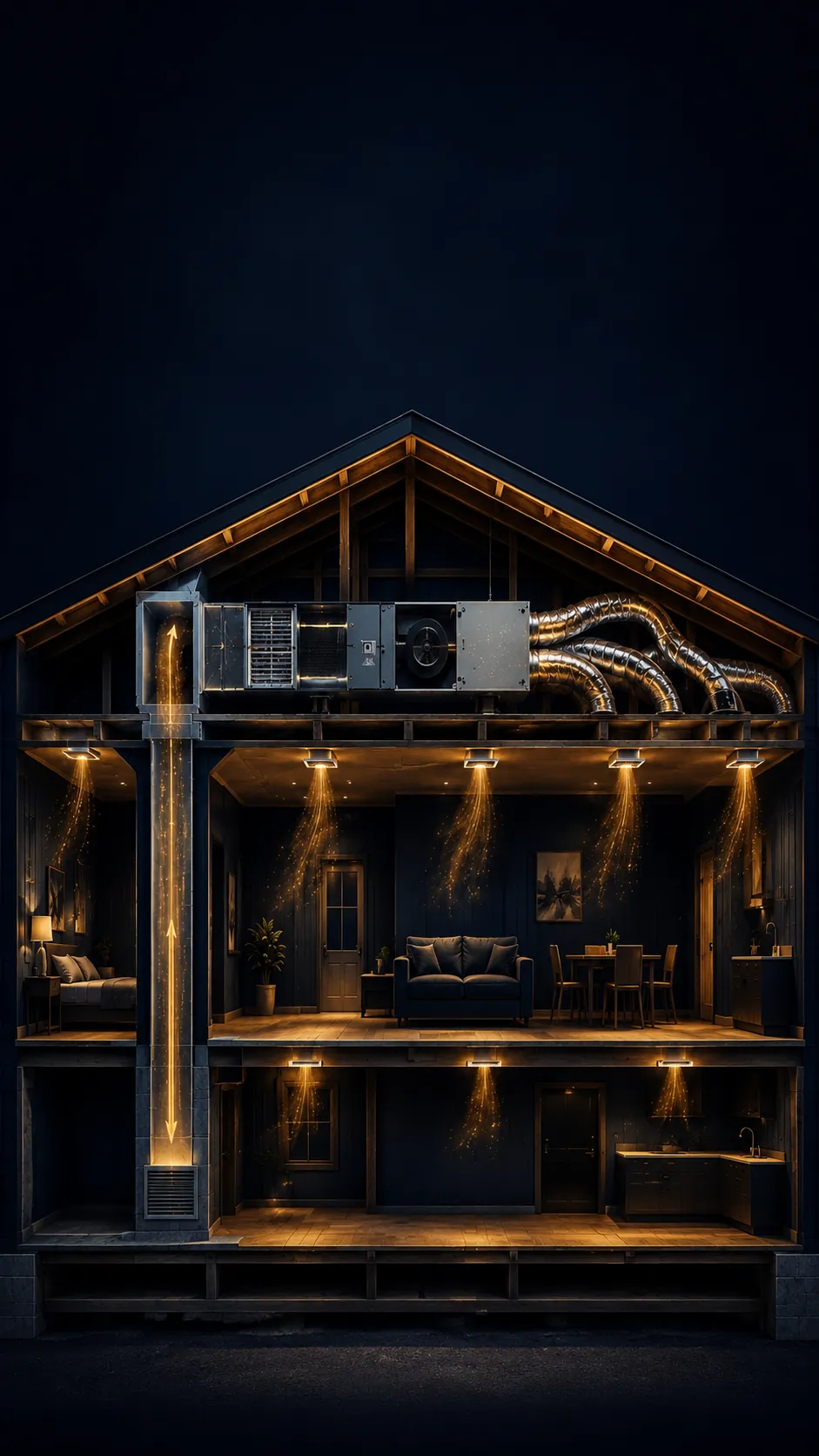
One connected outcome
Every room breathes what the air handler sends it.
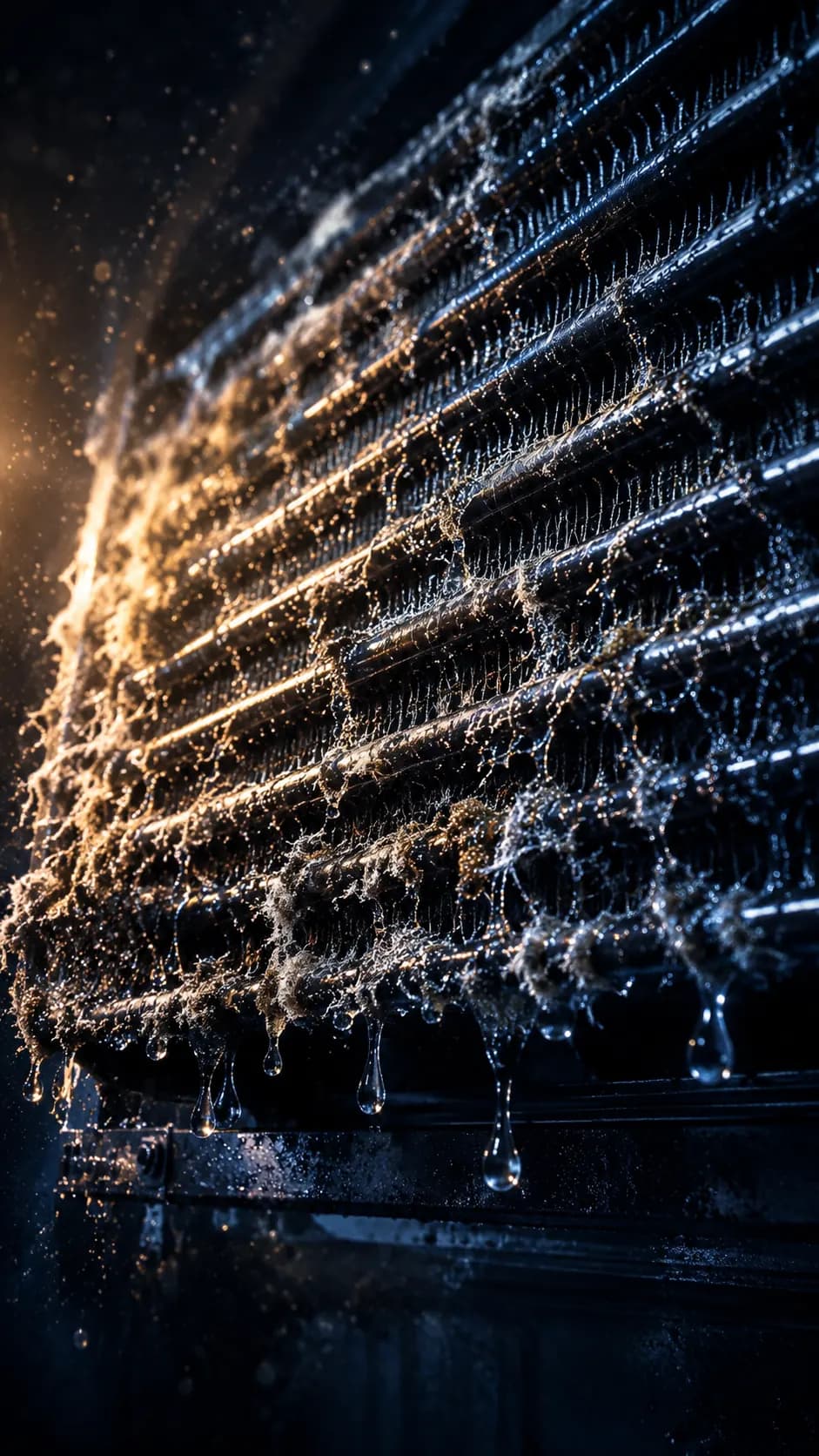
The evaporator coil
Cold, wet, and dark for most of the season — if the system lets it be.
The environment for growth
Mold does not need dirt. It needs a cold, wet, dark surface — and a system that keeps it that way.
A system that runs right keeps the coil drying between cycles, the ductwork moving rated airflow, and indoor humidity below the line where growth starts. A system that runs wrong builds exactly the environment mold is waiting for, and no cleaning outlasts it.
Oversized equipment
Satisfies the thermostat in minutes and shuts off before it has dehumidified anything. The coil stays cold and wet; the air stays damp.
Return-side leaks
Pull attic or crawlspace air past the filter and into the trunk — heat, moisture and dust, delivered straight to the coil.
Airflow below rating
A loaded blower or crushed run lets the coil run colder than designed. Condensate that should drain instead sweats past the pan.
What only an HVAC company can fix
Three faults no cleaning outlasts.
Each of these refills a clean air pathway from the same source it filled from before. A cleaning company can remove the result. It cannot touch the cause — and it is not paid to try.
Growth on the evaporator coil
CauseAn oversized system satisfies the thermostat before it has run long enough to dehumidify. The coil is cold, wet and dark for most of the season.
If only cleanedIt comes back the same summer.
The fixCorrect the sizing and the runtime, then clean the coil.
Ductwork that reloads with dust weeks later
CauseLeaks on the return side pull unconditioned attic or crawlspace air straight past the filter and into the trunk.
If only cleanedThe dust you paid to remove is replaced by more of it.
The fixSeal the return, then clean the pathway.
Registers that never seem to deliver
CauseUndersized, crushed or disconnected runs. Airflow is a duct-geometry problem, not a dirt problem.
If only cleanedA spotless duct that still moves too little air.
The fixMeasure CFM at the register, correct the run, verify it again.
The common mistake
The fastest way to quote a replacement is to read the tonnage off the old unit and install the same thing. If the original was oversized — and a great many are — that error gets carried forward for another fifteen years.
Oversized equipment cools quickly, shuts off, and never runs long enough to pull humidity out of the air. On the Gulf Coast that is not a minor inefficiency — it is the difference between a comfortable house and a clammy one that grows things in its ductwork.
We size against the building, evaluate the ductwork as part of the install, and verify airflow at commissioning.
Division two
Installation. Repair. Maintenance.
Maintenance
The cheapest airflow you will ever buy.
A fouled coil and a loaded filter cost efficiency continuously and quietly, and almost every emergency call has a visible precursor months earlier. Scheduled service is how a system stays at rated capacity — and how the ductwork behind it stays dry.
Coil, blower, and drain line service
Filtration checked and correctly specified
Airflow verified at register
Findings documented each visit
Integrity, made operational
The Standard is a behavior.
- I
Tell the truth.
Diagnose before prescribing. Explain the actual fault. Say when work is not warranted.
- II
Do the whole system.
All eight components of the air pathway. Isolated negative pressure, one duct at a time.
- III
Show the result.
Document the work. Measure indoor and outdoor air. Verify register airflow in CFM.

One truck. Both trades.
The vehicle at your curb carries the whole job.
The technicians who service the equipment and the technicians who clean the air pathway work to the same Standard and share the same documentation. Nothing gets handed to another company, and nothing gets handed back.
Questions
Asked before every install.
How do you size a replacement system?
Against the building, using a load calculation — not by matching the tonnage of the equipment being removed. Copying the old system inherits whatever sizing mistake was made originally, and oversized equipment short-cycles, controls humidity poorly, and wears out faster. That matters more on the Gulf Coast than almost anywhere.
Do you work on systems you did not install?
Yes, all makes and system types. You get a full diagnostic and a plain-language explanation of what failed and why before anything is authorized.
How do I know whether to repair or replace?
We will tell you honestly. The variables are the age of the system, the cost of the repair against replacement, the refrigerant it uses, and how the rest of the equipment is holding up. If a repair does not make economic sense we will say so — and if it does, we are not going to push you toward a new system.
Do you check the ductwork when installing a new system?
Yes. Putting correctly sized equipment onto undersized or leaking ductwork wastes most of what you paid for. The duct system is evaluated as part of the install, and airflow is verified at the register with a flow hood at commissioning.
Do you offer maintenance plans?
Yes. Scheduled service covers coil, blower, and drain line, checks and correctly specifies filtration, verifies airflow at the register, and documents findings each visit. Most emergency calls have a visible precursor months earlier.
Can you handle both the HVAC work and the duct cleaning?
Yes, and that is the advantage of the two divisions being one company. The technicians who clean the air pathway and the technicians who service the equipment work to the same Standard and share the same documentation.
Next step
The inspection is free. The Standard comes with it.
We measure the system, show you the numbers, and tell you plainly whether the work is warranted.